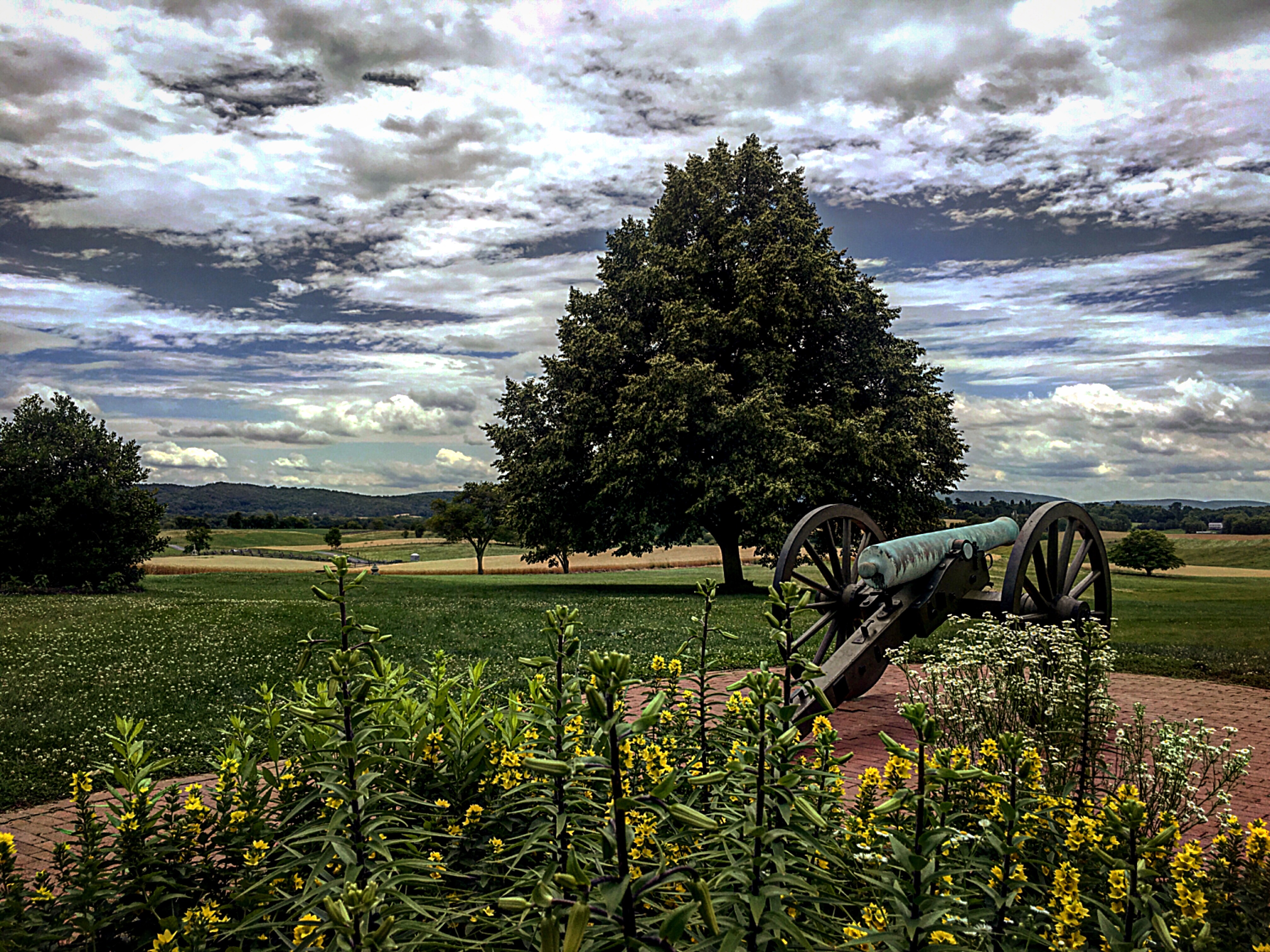
On our way to visit Washington D.C. we made an unexpected rest stop at Antietam National Battlefield, and we’re glad we did! Antietam was a large battle during the American Civil War, on September 17, 1862. It is known as being the “bloodiest day in American history”, where over 22,000 Americans died in battle, were wounded, or went missing or captured.
Upon arriving at the park, we explored the museum and listened to a park ranger talk, who detailed the happenings of the battle and pointed out where the locations were in relation to the visitors center. (10/10 recommend!) It was interesting to hear the battle strategy of both the Union and Confederate sides, as well as the importance of the battle in relation to the war. Although the battle was technically a draw on the Battlefield due to no one gaining any ground (it went down in the books as a Union victory), Lincoln issued the Emancipation Proclamation 5 days later. It was really interesting to be so close to history and to hear everything in such detail. It made us both wonder why we don’t know more history. So much different than sitting in a classroom or reading it from a book! After exploring the grounds around the visitors center, and getting our cancellation stamp, we went to the observation tower to see the lay of the land, where we could see the “sunken road”, which became know as “bloody lane” due to the high number of casualties during the battle. The sunken road was a road farmers used to bring their crop to town, and over time this area had become worn down, almost into a trench, completely hidden from view. The confederate soldiers lined their forces in this trench which shielded them from the Union soldiers. As the battle went on, the Union soldiers eventually were able to get perpendicular to the start of the road, and took aim at the soldiers within the trench. After a quick lunch in the car we realized that unfortunately, we were running out of time we had available to explore and needed to get into DC.
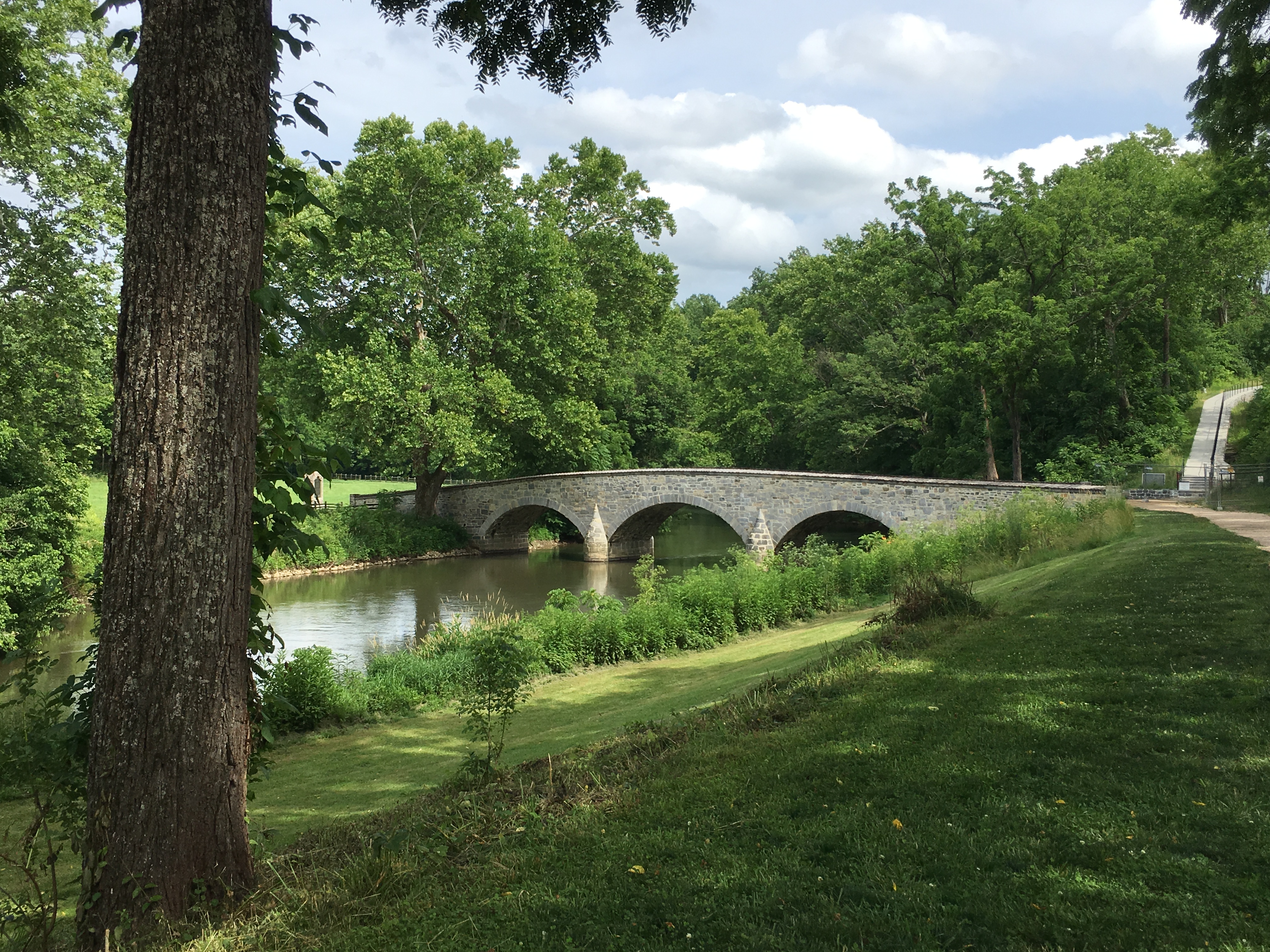
Little did we know that we would be back the next evening on our way back from D.C. with Gabby’s parents. We wanted to see Burnside’s Bridge the day before, so we made it our priority for the visit. After what seemed like an endless amount of times getting turned around, we first stopped at the Antietam National Cemetery, and then after about 10 wrong turns found Burnside’s Bridge. From our ranger talk, we learned that at the last surge of the battle, the Union soldiers were attempting to cross this very narrow bridge. They would send small numbers of soldiers over, and they were unsuccessful for a few reasons: 1-they got lost and weren’t coming out of the forest at the right place, and 2- the Confederate soldiers had sharpshooters at the top of the ridge gunning them down as they came out of the woods and to the bridge. We can totally relate to the whole getting lost trying to find the bridge thing. . . At the battle’s end, the 51st division of NY and PA were successful in making it over the bridge. Apparently, they were motivated by the promise their whiskey rations being returned to them. I guess whatever motivates you! The other neat thing to see at the Burnside Bridge was the “witness tree”, which was the same tree that sits next to the bridge from the time of the war. There were many paintings of battle scenes in the museum, and the ones that showed the bridge showed the same tree, obviously much smaller than it is today. If only trees could talk!
It’s amazing to think that such a beautiful landscape is home to the most deadly day in American history. To look out at the landscape and think that on that day many years ago, there were 100,000 soldiers fighting through the chaos and confusion, marching and negotiating their way through an area they had never been to. It’s definitely a somber experience, making one grateful of the times and country we live in.
America the Beautiful Pass Total: $45
 Bill and Gab’s Excellent Adventure